
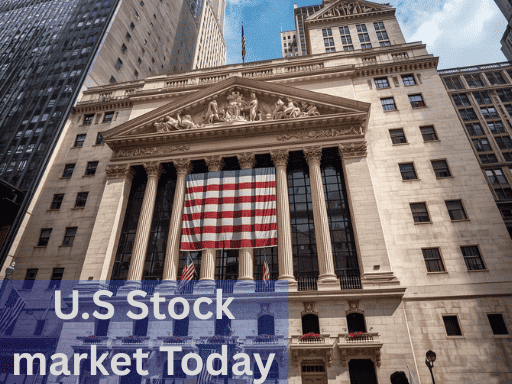
The U.S. stock market isn’t just a place where ticker symbols flash across screens — it’s a real-time barometer of investor expectations, corporate performance, economic health, and even global politics. When stocks rise, confidence grows. When they fall, everyday investors feel it in retirement accounts, corporate hiring plans shift, and financial markets worldwide react.
Today, the U.S. market stands at the intersection of geopolitical risk, economic data, and transformative technology trends, and that mix is driving heightened volatility.
Today’s Market Landscape: A Storm of Influences
1. Geopolitical Tensions Have Wall Street on Edge
One of the most influential factors right now is the sharp escalation of conflict in the Middle East.
Recent strikes involving U.S. and allied forces against Iran have triggered sharp reactions in financial markets:
- Major U.S. indexes opened lower — futures for the S&P 500 and Dow Jones both fell sharply.
- Crude oil prices surged 8–9%, as fears of supply disruptions through the Strait of Hormuz mounted. (AP News)
- Safe-haven assets like gold jumped, while bonds rallied as investors prioritized preservation over risk.
Why does this matter? Because geopolitical shocks don’t just disrupt energy prices — they influence corporate earnings expectations, investor sentiment, and the outlook for the global economy.
2. Market Volatility Is Elevated — But Not Unusual
Volatility isn’t automatically bad — it simply means prices are moving more than usual. However:
- Analysts expect continuing price swings as markets price in geopolitical risk. (Investopedia)
- Energy, defense, and commodity stocks have reacted differently than tech and growth stocks — a sector drama that often accompanies uncertainty.
This kind of environment can be confusing for everyday investors, but it also creates opportunities for disciplined long-term strategies.
Deeper Causes Behind Today’s Moves
Today’s market isn’t reacting only to headlines — there are deeper currents shaping sentiment:
1. AI and the Tech Sector
Artificial intelligence and related technologies have been a major influence on the stock market for the last two years. Companies like Nvidia, Meta, Microsoft, and others have seen their fortunes rise and fall as earnings, spending forecasts, and adoption trends shift.
Recent reporting suggests that while long-term AI spending is projected to grow substantially — possibly into the trillions of dollars — many companies are still trying to figure out how to translate that spending into profit and tangible growth.
In practice:
- Investors are becoming more selective, favoring firms with clear AI revenue paths over speculative bets.
- Tech stocks that once drove market highs can now pressure the market when their growth expectations wobble.
2. Economic Data and Interest Rates
Another key backdrop is U.S. economic data — especially jobs, inflation, and interest rate expectations.
Investors watch this closely because:
- Stronger job growth usually supports markets, since it indicates healthy consumer demand.
- Higher inflation or stubborn prices can keep interest rates elevated longer, which is typically negative for stocks.
Recent data showing hotter-than-expected inflation has added pressure on equities and complicated the Federal Reserve’s planning. (Yahoo Finance)
The upcoming jobs report this week is one of the most anticipated events on Wall Street, because it will help shape expectations for monetary policy.
Who’s Winning and Who’s Losing — Sector Snapshot
With today’s headline volatility, not all parts of the market move together:
📊 Sectors That Tend to Perform Better During Uncertainty
- Energy — benefits from higher oil prices (short-term)
- Defense — attracts attention amid geopolitical tensions
- Precious Metals — gold and silver often rise as risk assets fall
📉 Sectors That Can Struggle in Risk-Off Mode
- Technology — especially stocks priced for growth
- Consumer discretionary — risk appetite drops when uncertainty rises
This divergence is important: even if the overall market slides, smart investors look for relative winners and laggards, rather than treating all stocks the same.
Context From Recent Weeks: A Market in Transition
To understand today’s moves, it helps to look back over the last few months. Prior to these geopolitical shocks:
- U.S. stocks were already showing mixed performance as AI sentiment and inflation data influenced trading.
- The broader market had periods of volatility tied to economic data and sector rotation.
- Unlike classic bear markets, the market hasn’t entered a sustained downward trend — instead, it’s been more choppy than directional.
In other words: this feels like a market searching for direction, not one in freefall.
What This Means for Individual Investors
Here’s how everyday investors might think about today’s environment:
✅ Stay focused on long-term goals
Short-term volatility is normal — and even expected — during big geopolitical events.
📌 Diversification matters
Holding a mix of sectors helps cushion against sudden swings.
📊 Economic data still counts
Jobs reports, inflation prints, and earnings will continue to shape market direction long after headlines fade.
Conclusion — A Market in the Eye of the Storm
Today’s U.S. stock market is a snapshot of global uncertainty meeting powerful economic and technological trends. From geopolitics to AI, from inflation to sector rotation, prices are moving in response to a rich set of forces — not just one headline.
While headline risk can trigger volatility, remember:
Markets always price risk — eventually it becomes opportunity.
For thoughtful investors who interpret these forces rather than react emotionally to them, periods like this can be times of clarity, not chaos.