
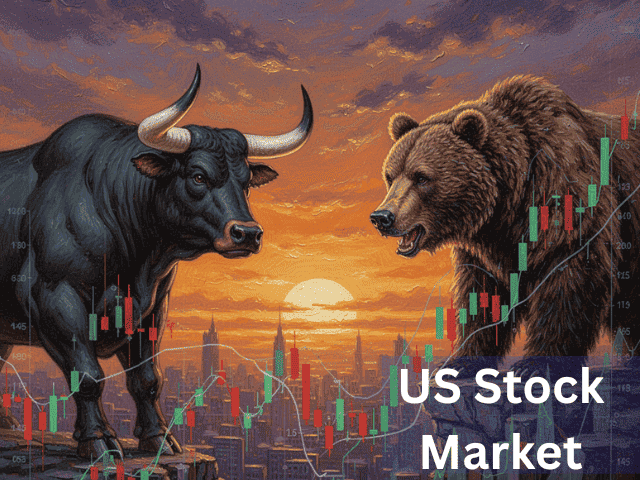
The U.S. stock market remains the largest and most influential in the world — a bellwether for global economic sentiment, corporate growth, and innovation cycles. In 2026, this market is characterized by a mix of resilience, volatility, and transformation. While the major indexes continue to draw investor attention, underlying forces — from artificial intelligence (AI) investment to geopolitical and policy risks — are shaping a market that’s far from steady.
This article breaks down where the market stands today, what trends are driving price action, and how you can interpret this complex landscape.
1. The Market Landscape: Bulls, Bears, and Investors’ Perception
Where Major Indexes Stand
As of early 2026, major U.S. equity indexes like the S&P 500, Dow Jones Industrial Average, and Nasdaq Composite are generally moving higher after bouts of volatility. Technology stocks — especially those tied to AI — have been key drivers of this upward momentum. (Investopedia)
Yet the broader picture is not uniform. Some investors point to increased participation across sectors — a phenomenon sometimes called the “Great Rotation” — where rallying stocks extend beyond just the biggest tech names and include cyclical and value sectors. (FinancialContent)
Investor Sentiment — A Balance of Hope and Fear
Gallup polls show that many Americans expect both economic growth and stock market gains in 2026, though pessimism remains about inflation and unemployment. This illustrates how psychological factors — confidence in markets versus fear of economic slowdown — remain powerful drivers of market behavior. (Gallup.com)
2. What’s Powering the Market: AI, Productivity, and Capital Flows
Artificial Intelligence: Double-Edged Sword
There’s no question that AI investment is reshaping the market. A surge in capital spending by giants like Nvidia and other tech firms has powered massive earnings growth and underpinned investor optimism. Some analysts now project stronger earnings growth in 2026 and above-average total returns for the S&P 500. (The Motley Fool)
However, this dynamic also brings risk. Valuations in AI-linked stocks are high by historical standards, and concerns about an AI bubble — where prices outsized fundamentals — are real. These fears have contributed to volatility in tech and software shares, even as demand for AI products grows.
Productivity Gains, But Uneven Labor Trends
Economists point to strong productivity improvements — where output grows faster than labor input — often linked to automation and AI integration. While this boosts corporate profitability, it doesn’t necessarily translate directly into more jobs, creating tension in the broader economy. (360 Wealth Management)
Capital flows from institutional investors, including pension funds and global sovereign investors, continue to flood U.S. markets, reinforcing structural demand for equities. This long-term capital acts as a stabilizing force, even amid short-term volatility.
3. Major Risks on the Horizon
Tariffs and Geopolitics
Recent tariff policies and trade tensions — including disputes with key trading partners — have introduced uncertainty into global supply chains. In some cases, these fears have triggered sharp market sell-offs. A notable example is the January 20, 2026 stock market sell-off, driven by tariff rhetoric and geopolitical concerns.
Markets also reacted to legal developments, such as U.S. Supreme Court decisions affecting economic policy priorities, showing how political events can rapidly sway investor sentiment. (The Guardian)
Small Cap Risks and Market Breadth
While large companies dominate headlines, smaller companies don’t always reflect the same strength. Some analysts warn that recent rallies in small-cap stocks may be misleading, driven more by speculative enthusiasm than by solid profitability. (MarketWatch)
This speaks to an important concept: market breadth. Strong broad participation — where many stocks move up together — is healthier than rallies concentrated in a few megacaps. Data suggests breadth is improving in 2026, but risks persist.
4. Where Analysts See the Market Going
Bullish Forecasts
Many investment banks remain optimistic about 2026. Analysts forecast robust earnings growth — even double-digit gains for the S&P 500 — driven by tax cuts, easing monetary policy, and continued AI investment.
Some strategists believe this could result in annual returns exceeding long-term averages if these conditions hold.
Cautious Voices
Other market watchers urge caution, pointing to:
- Elevated valuations in tech stocks
- Ongoing policy and legislative uncertainty ahead of elections
- Continued labor market shifts
This view suggests that while growth is possible, volatility and downside risk remain real threats.
5. How This Affects You (Investors and Everyday People)
Whether you’re directly investing or simply tracking the market, here are practical takeaways:
- Diversification still matters. Relying on just a handful of tech giants can expose investors to dramatic swings. Broader exposure — including value and international equities — can help mitigate risks.
- Be wary of “hype cycles.” Themes like AI can dominate headlines, but markets sometimes overshoot fundamentals.
- Economic data matters. Fundamentals like earnings growth, inflation, and consumer spending ultimately anchor valuations, not just investor sentiment.
Conclusion: A Market of Opportunity — But With Caution
In 2026, the U.S. stock market is a fascinating blend of innovation-driven optimism and real structural challenges. Strong earnings growth, powerful capital flows, and AI-led investment continue to support equity valuations. Yet headlines about policy risks, geopolitical tensions, and market speculation remind investors that opportunity never comes without risk.
For anyone trying to make sense of today’s market, the key is balance: stay informed, diversify thoughtfully, and don’t let short-term noise drown out long-term fundamentals.
In a world where markets can turn on political headlines or technological breakthroughs alike, the most successful investors combine discipline with flexibility — watching not just what is exciting, but what is sustainable.